Blog
Adaptive music, in practice
Technique, Wwise/FMOD alternative comparisons, AI composition notes, and what we learn building game audio without middleware.
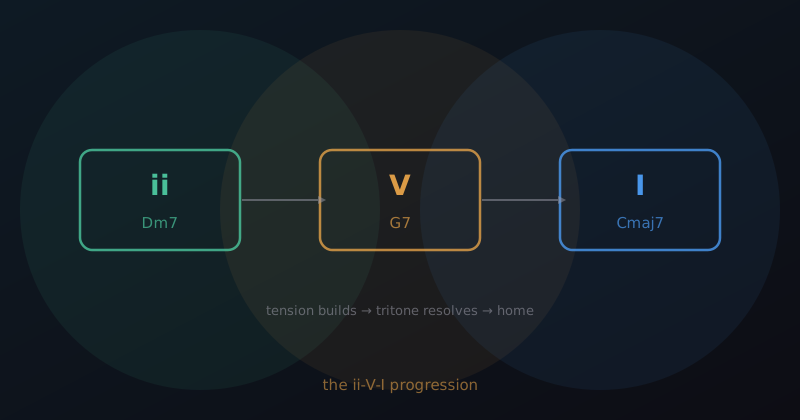
ii-V-I: The Three Chords That Define Jazz
Every jazz musician learns the ii-V-I progression on day one. Here's why it's so harmonically powerful — and why every style of jazz uses some version of it.
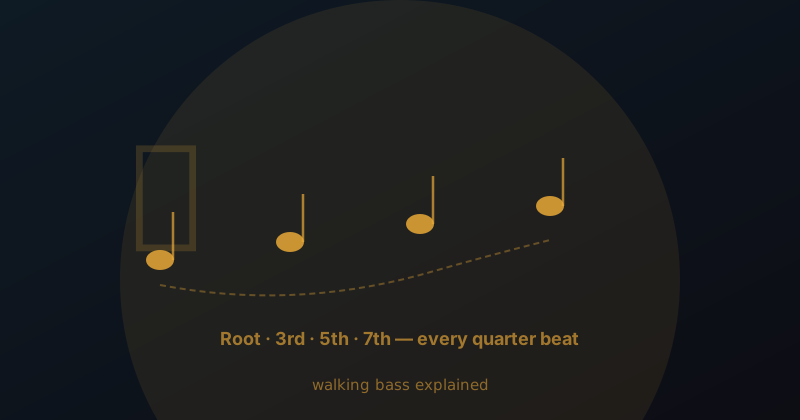
The Walking Bass Line: Jazz's Most Important Invention
The walking bass moves on every quarter beat, outlines chord tones, and creates forward momentum without a drummer. Here's how it works and why it matters.
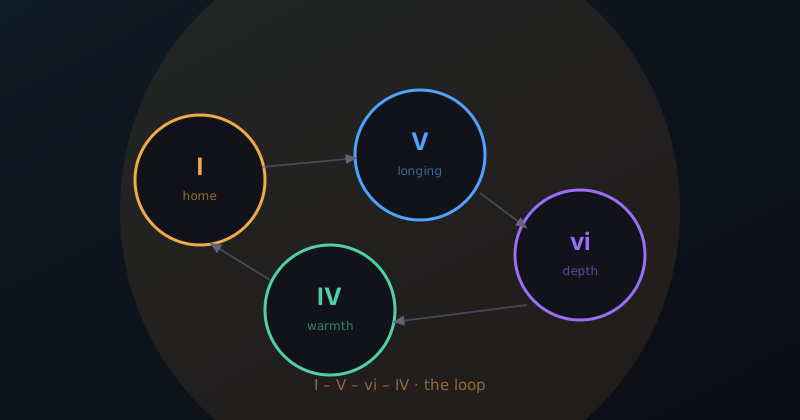
Why I–V–vi–IV Never Gets Old: The Harmony Behind New Age Piano
The I–V–vi–IV chord progression appears in thousands of pop songs and nearly every New Age piano piece — there's a neurological reason it works so well.
Crystal Morning: Composing a Kiraro-Style Piano Piece from Scratch
A walk through every compositional decision in Crystal Morning — from key selection to the peak moment at G5, and why the piece ends on a held C instead of a cadential figure.
First Snow: Writing New Age Music in Minor Key Without Sadness
Most New Age piano is stubbornly major. Minor keys carry emotional weight that's hard to manage. Here's how First Snow stays in E minor without becoming a grief piece.
Starfield: Writing New Age Music for Synthesizers
Most New Age piano uses acoustic instruments. Starfield uses a synth-lead and sustained strings. Here's why, and what changes when you remove the piano from the centre of the texture.
Twilight Garden: The Anatomy of One Compositional Gesture
Bar 5 of Twilight Garden contains a single leap from F4 to F5 — one octave up. That moment is the entire piece. Here's why a single gesture can carry a whole composition.
Forest Rain and River's Edge: Composing with Water in Mind
Two pieces in the New Age collection use water as a compositional model — one for rain, one for a river. They share an arpeggio texture but feel completely different. Here's why.
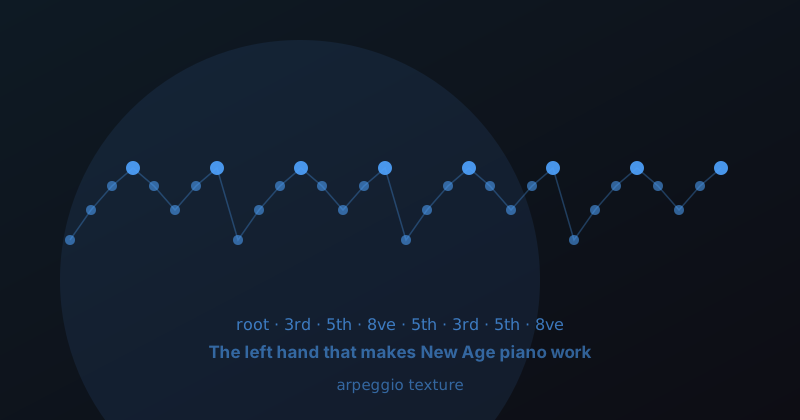
The Arpeggio as Meditation: Why the Left Hand Makes New Age Piano Work
In Kiraro's music, the right hand sings and the left hand breathes. The arpeggio pattern — root, third, fifth, octave — is not decoration. It's the reason the music feels the way it does.
Hear what these posts talk about
Every technique here is live on the marketplace — adaptive states, AI drafts, real sampled instruments, playable demos.
Browse scores