Blog
Adaptive music, in practice
Technique, Wwise/FMOD alternative comparisons, AI composition notes, and what we learn building game audio without middleware.
Filtering by #melody — clear

How to Write a Melody That Sticks: 7 Practical Steps
Learn how to write a memorable melody with motif, contour, repetition, rhythm and tension, plus a worked four-bar example in note names and exercises.
Read the post →
Romance in Bb: Writing a Lyrical Violin Melody
The Romance in Bb was built around a specific challenge: write a violin melody that feels genuinely warm and singable, not technically impressive. Here's how.
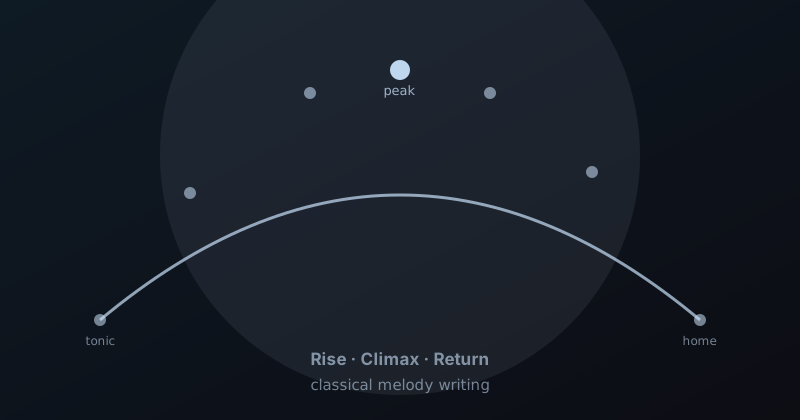
How Classical Melodies Are Built: Shape, Peak, and Return
The best classical melodies follow a structural logic that can be described but not fully explained. Here are the principles behind the melodies of Haydn, Mozart, and Beethoven.
Violin in the Romantic Period: Why It Became the Singing Voice of the Orchestra
The violin dominated Romantic-era melody because its range, expressiveness, and ability to sustain notes made it the closest instrumental equivalent of the human voice.
Twilight Garden: The Anatomy of One Compositional Gesture
Bar 5 of Twilight Garden contains a single leap from F4 to F5 — one octave up. That moment is the entire piece. Here's why a single gesture can carry a whole composition.
Hear what these posts talk about
Every technique here is live on the marketplace — adaptive states, AI drafts, real sampled instruments, playable demos.
Browse scores