Blog
Adaptive music, in practice
Technique, Wwise/FMOD alternative comparisons, AI composition notes, and what we learn building game audio without middleware.
Why We Still Listen to Classical Music in 2026
Classical music is 400 years old at its newest and 1000 years old at its oldest. Here's why it still occupies a meaningful place in contemporary listening.
Read the post →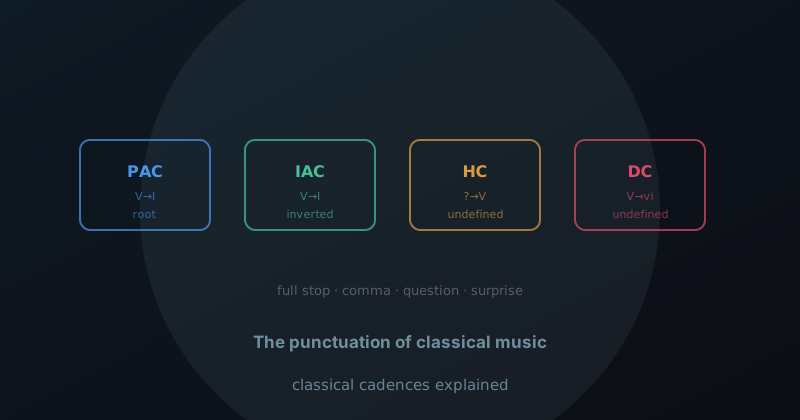
Classical Cadences: How Phrases End and Why It Matters
A cadence is how a musical phrase ends. Classical music has four main types, and each creates a different emotional effect. Understanding cadences is understanding classical grammar.
Romance in Bb: Writing a Lyrical Violin Melody
The Romance in Bb was built around a specific challenge: write a violin melody that feels genuinely warm and singable, not technically impressive. Here's how.
Spring Prelude: Composition Notes for a D Major Allegro
How the Mowjera Spring Prelude was constructed — the choice of D major, the scale run in bar 5, and why Allegro tempo reveals the character of the violin.

Chamber Music: The Most Intimate Form in Classical Music
Chamber music — small ensembles in small rooms — has produced some of Western art's most profound music. Here's its history and what sets it apart from orchestral music.
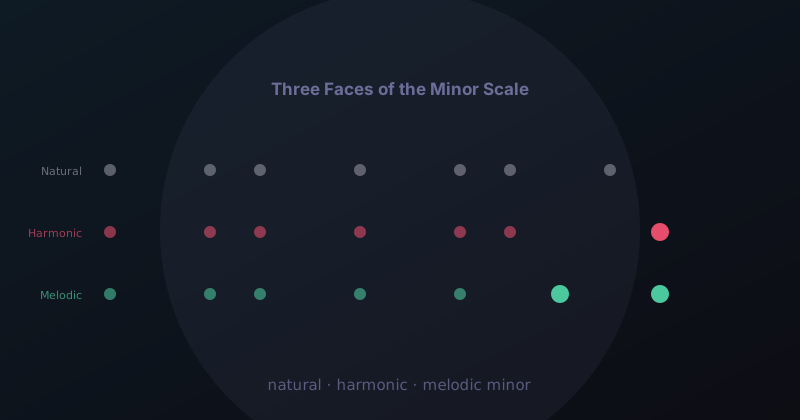
Natural, Harmonic, and Melodic Minor: The Three Faces of Minor Keys
Classical music treats 'minor key' as more complex than major: there are three minor scales, and composers switch between them mid-piece for different expressive effects.
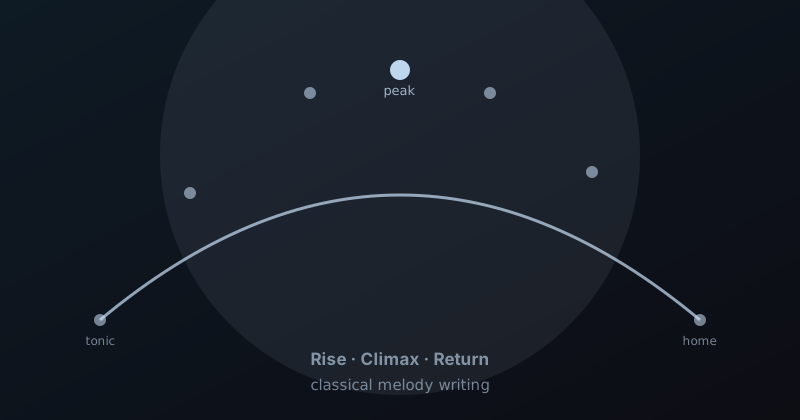
How Classical Melodies Are Built: Shape, Peak, and Return
The best classical melodies follow a structural logic that can be described but not fully explained. Here are the principles behind the melodies of Haydn, Mozart, and Beethoven.
Violin in the Romantic Period: Why It Became the Singing Voice of the Orchestra
The violin dominated Romantic-era melody because its range, expressiveness, and ability to sustain notes made it the closest instrumental equivalent of the human voice.
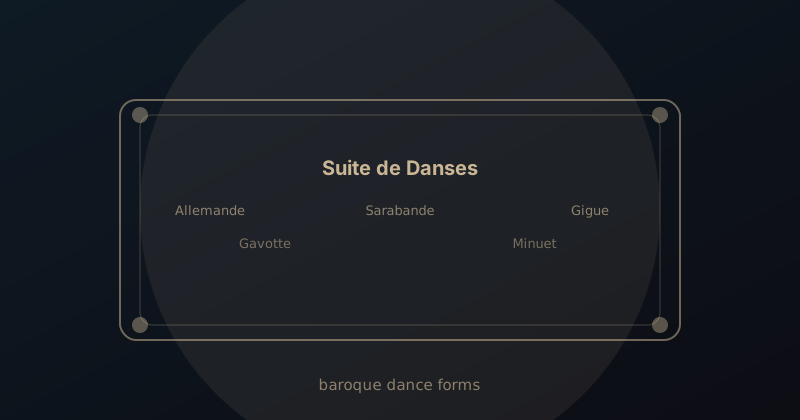
Baroque Dance Forms: The Gavotte, Minuet, and the Suite
Before the symphony and the sonata, European concert music was built around dance. The gavotte, minuet, sarabande, and gigue gave composers a formal vocabulary that lasted two centuries.
Hear what these posts talk about
Every technique here is live on the marketplace — adaptive states, AI drafts, real sampled instruments, playable demos.
Browse scores