Blog
Adaptive music, in practice
Technique, Wwise/FMOD alternative comparisons, AI composition notes, and what we learn building game audio without middleware.
Filtering by #composition — clear
Twilight Garden: The Anatomy of One Compositional Gesture
Bar 5 of Twilight Garden contains a single leap from F4 to F5 — one octave up. That moment is the entire piece. Here's why a single gesture can carry a whole composition.
Crystal Morning: Composing a Kiraro-Style Piano Piece from Scratch
A walk through every compositional decision in Crystal Morning — from key selection to the peak moment at G5, and why the piece ends on a held C instead of a cadential figure.
Starfield: Writing New Age Music for Synthesizers
Most New Age piano uses acoustic instruments. Starfield uses a synth-lead and sustained strings. Here's why, and what changes when you remove the piano from the centre of the texture.
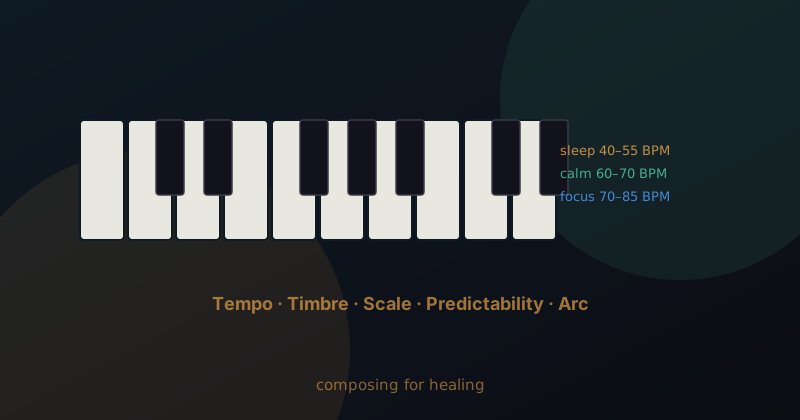
Composing for Healing: A Practical Guide to Therapeutic Music
Therapeutic music is not simply 'relaxing music.' It has specific acoustic properties, structural requirements, and clinical intentions. Here's how to compose with healing in mind.
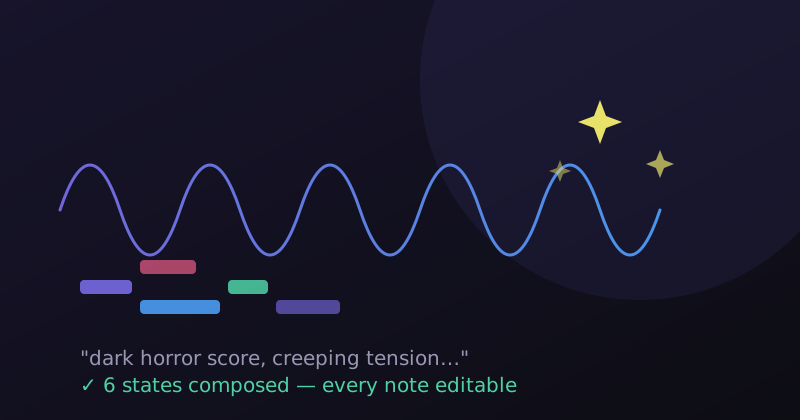
Describe the music, get the score: how our AI composer works
Most AI music tools hand you a frozen WAV. Ours hands you an editable score — here's the architecture decision that makes that possible, and why it matters for game audio.
Hear what these posts talk about
Every technique here is live on the marketplace — adaptive states, AI drafts, real sampled instruments, playable demos.
Browse scores