Blog
Adaptive music, in practice
Technique, Wwise/FMOD alternative comparisons, AI composition notes, and what we learn building game audio without middleware.
Filtering by #tempo — clear
Why We Still Listen to Classical Music in 2026
Classical music is 400 years old at its newest and 1000 years old at its oldest. Here's why it still occupies a meaningful place in contemporary listening.
Read the post →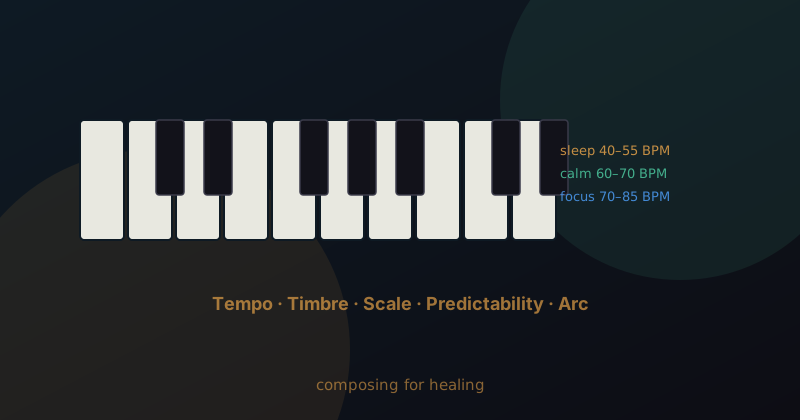
Composing for Healing: A Practical Guide to Therapeutic Music
Therapeutic music is not simply 'relaxing music.' It has specific acoustic properties, structural requirements, and clinical intentions. Here's how to compose with healing in mind.
Music for Sleep: The Evidence Behind Bedtime Listening
Not all music helps you sleep. Tempo, timbre, and harmonic complexity each play measurable roles in sleep-onset time and sleep quality. Here's what the research shows.
Best Music for Platformer Games: Tempo, Key, and Adaptive Layering
Platformer music lives or dies on momentum. A practical guide to tempo, key choice, and how adaptive layering (calm traversal → boss intensity) keeps the energy matched to what's on screen.
Hear what these posts talk about
Every technique here is live on the marketplace — adaptive states, AI drafts, real sampled instruments, playable demos.
Browse scores