Blog
La musique adaptative, en pratique
Techniques audio, alternatives sans code à Wwise et FMOD, notes de composition IA, et ce que nous apprenons en créant l'audio de jeu sans middleware.
Filtré par #theory — effacer

Shell Voicings: Why Jazz Pianists Only Play Two Notes
Jazz chord voicings often leave out the root and fifth entirely, keeping only the 3rd and 7th. These 'guide tones' carry the full harmonic information of the chord in two notes.
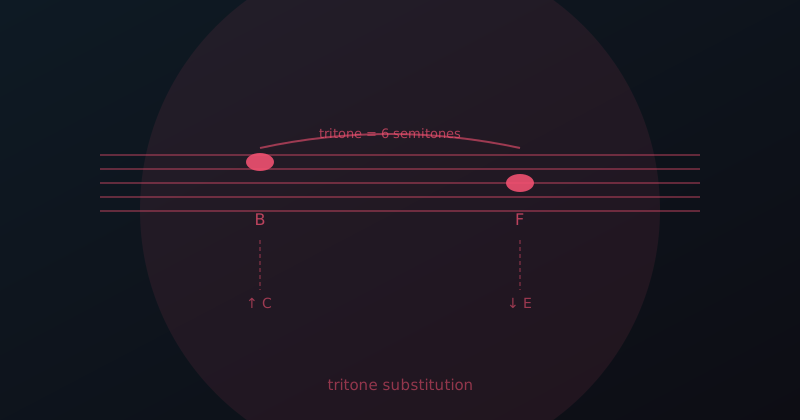
The Tritone Substitution: Jazz's Most Useful Trick
A tritone substitution replaces any dominant seventh chord with one whose root is a tritone away. The mechanics are simple; the effect is striking.
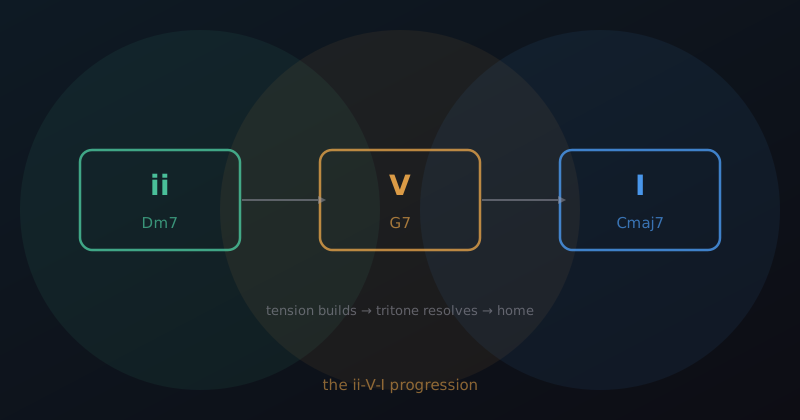
ii-V-I: The Three Chords That Define Jazz
Every jazz musician learns the ii-V-I progression on day one. Here's why it's so harmonically powerful — and why every style of jazz uses some version of it.
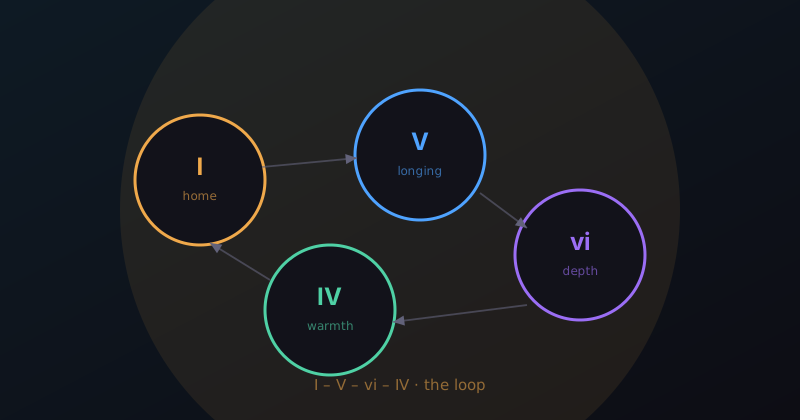
Why I–V–vi–IV Never Gets Old: The Harmony Behind New Age Piano
The I–V–vi–IV chord progression appears in thousands of pop songs and nearly every New Age piano piece — there's a neurological reason it works so well.
Écoutez ce dont parlent ces articles
Chaque technique présentée ici est en ligne sur le marketplace — états adaptatifs, brouillons IA, vrais instruments échantillonnés, démos jouables.
Parcourir les partitions